
LMI Splats
C++ Powered Gaussian Splats processing tools. Faster than anything you've tried in a DCC.







Current version 1.0.0

Description
Gaussian Splatting use cases are expanding every day. In Houdini, GSOPs toolsets make it possible to work with splats directly, and since Houdini 21, Splat import is supported natively. But as captures get more ambitious, performance can quickly become a bottleneck - scenes turn heavy, interaction slows down, and iteration becomes painful. LMI Splats Tools are designed to remove that bottleneck. Built in C++ with efficient, production-focused logic under the hood, these operators keep large splat workflows responsive, typically delivering 5–25× faster performance than comparable DCC-based approaches.
Moreover, we’ve been deeply invested in Gaussian Splat foliage as part of our Octane Assembly Pipeline. As a result, we can capture real-world trees and bring them into production as animatable assets using this toolset - preserving natural complexity while keeping the workflow fast, controllable and 3DGS compliant.
Features

LMI Splats Loader
If you’re familiar with an ACES workflow, think of this loader as our IDT. It initializes everything required to work with splats in Houdini in a streamlined, production-ready way; no conversion, pre-bake, or prep steps needed. From the moment you load, both the viewport representation and the underlying raw attributes are correctly configured and ready to use.

LMI Splats Transform
Since LMI Loader is our “IDT” into the Splat world, you can work with any Houdini native SOP and still get correct harmonics once you bake. However, if you’re using OctaneRender for Houdini and want to preview your splats earlier in the process, you can use our custom Transform operator. It preserves not only Houdini-native transform behavior, but also every Splat-specific requirement needed for accurate rendering and consistent viewport parity.

LMI Splats Harmonics
Designed for non-ideal captures - especially trees and foliage. Even with LMI Mission Planner and fast drone captures, branch motion is inevitable. During training, those subtle position shifts can leak unwanted detail (like sky) into areas that are locked by SfM: the points stay fixed, but the source imagery has moving pixels. The result is false colour and luminance being baked into the higher harmonic bands, showing up as jarring hue shifts or “ghost” lighting.This tool mitigates those artifacts, producing scans that feel more natural, more evenly lit, and free of distracting high-band luminance ghosts.



Before: Sky colour is baked into SfM-locked points. After: Harmonics Editor suppresses it as much as possible for a cleaner, more natural scan in all views and bands.

LMI Splats Editor
The Editor is designed as a second, more radical corrective set of passes to minimize, often eliminate, the need for manual cleanup. It detects faulty splats and provides precise ways to isolate splats that have drifted or “mutated” during training, for example by targeting specific hue or luminance ranges. It also helps identify and remove rogue and orphaned splats in a scan, ensuring the cleanest, sharpest result possible.
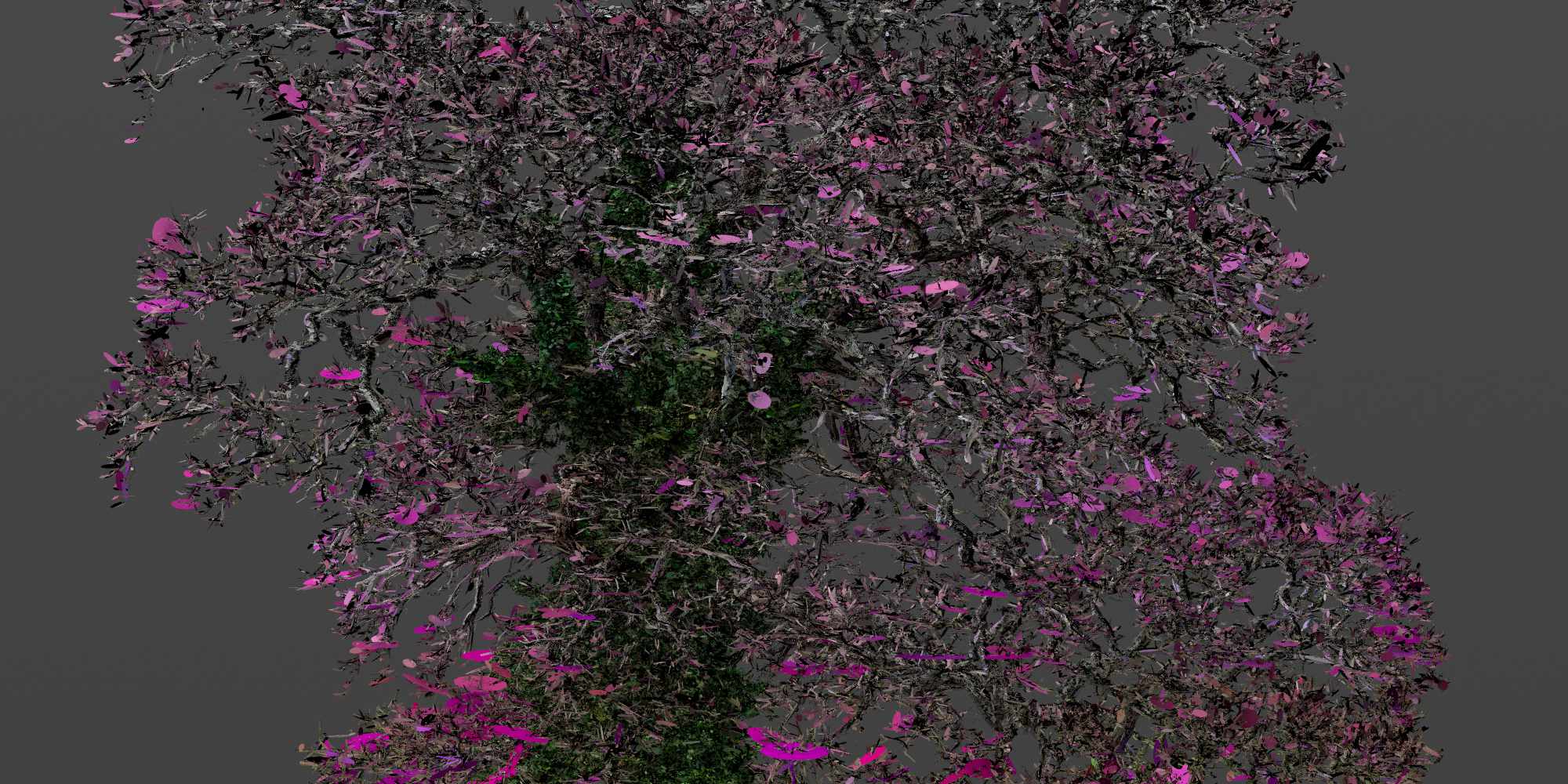
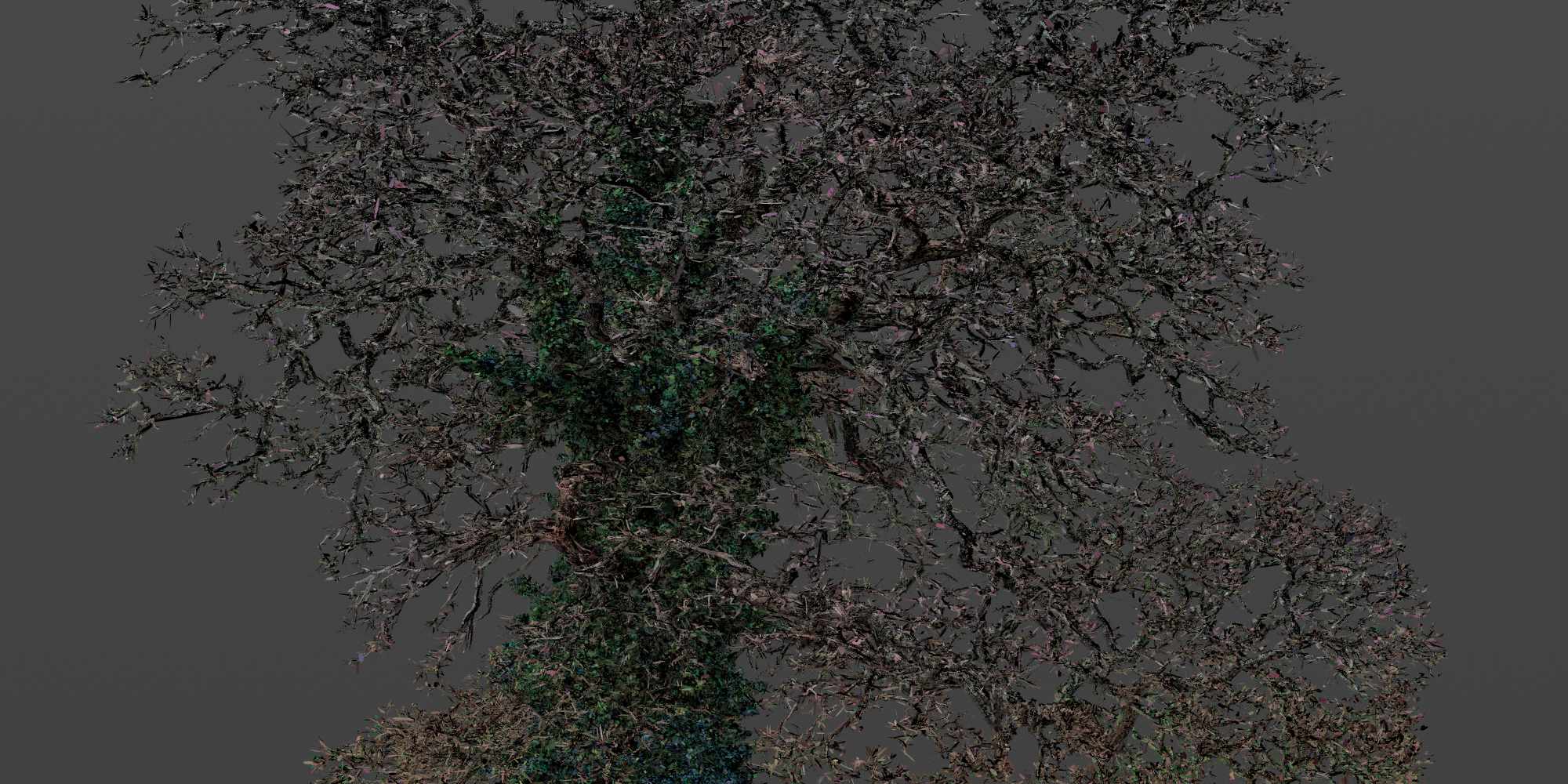
Before: Outlier splats with artifact hue shifts and imbalance. After: Balanced, natural colour.
Editors Color Grading features are built for both artists and technical pipelines: it grades directly in coefficient space, avoids hidden clipping, and preserves full color signal integrity. Hue is rotated with a scientifically stable model, saturation is luma-preserving, and tonal controls are signed-safe - so grading stay predictable, clean, and artifact-free.

LMI Splats Deform
The Deformer is, in many ways, a sibling to Houdini’s native Point Deform SOP, but purpose-built for splats. It’s designed to preserve Splat-specific data, keeping the more fragile harmonic information intact under heavier deformations as much as possible. It’s also tightly integrated with LMI Sims tools such as Infectracer and Wind: use Infectracer to derive a skeleton from the scan, drive motion with Wind, and then apply that motion back onto the splat through the Deformer.
Deformation of splats requires tracking of harmonics orients and scales. This becomes exponentially heavier. Splats Deform handles this efficiently while taking care of all Splats-specific attributes.

LMI Splats Viewer (Windows only)
The Viewer lets you preview your final splats directly in the Houdini viewport - live, at full quality. It makes splat processing seamless by removing the constant roundtrip to external viewers or a render engine just to verify results, saving a huge amount of iteration time. Adapts to your local OCIO environment.

LMI Splats Baker
The Baker removes the pain of long .PLY write-outs, especially on dense splats where export time becomes the bottleneck. It also offers optional .SPZ compression. Compression won’t speed up export (it’s mainly a packaging step), but it can reduce file size by ~10×, which makes storage, transfers, and archiving far easier. .SPZ splats are supported in Octane.
Performance
Performance was the primary reason we built our own splat-processing tools. Most existing solutions live outside DCCs and are aimed at basic, manual cleanup - not the demands of real CG production. GSOPs were the first toolset to bring proper, procedural Splat manipulation into Houdini, but because they rely on native nodes, VEX and python, they can become a bottleneck on heavier captures. LMI Splats takes a different approach: custom external operators, purpose-built for speed, and seamlessly integrated into the Houdini UI. The result is a workflow that stays responsive even at scale. Below are timed, side-by-side performance comparisons - more convincing than words.

Performance comparison between LMI Splats and alternative tools.
Licensing
Tools are provided under a worldwide, non-exclusive license for use in any production context. You may install and use the toolset for any lawful purpose, including commercial work, client deliveries, internal studio pipelines, and distributed production environments.
All software is provided “as is”, without warranty of any kind, to the maximum extent permitted by applicable law.
Digital purchases are final and non-refundable, except where a refund is required by applicable consumer protection law.