
LMI IO
Every day tools. You've used similar before, but won't be able to live without these special ones.


Current version 1.0.0 - 26216

Description
Production utilities for a disciplined pipeline: standardized outputs, robust Alembic publishing, and sane USD @path management. Exports stay organized, scenes stay manageable, and iteration stays fast.
Features

LMI Cache
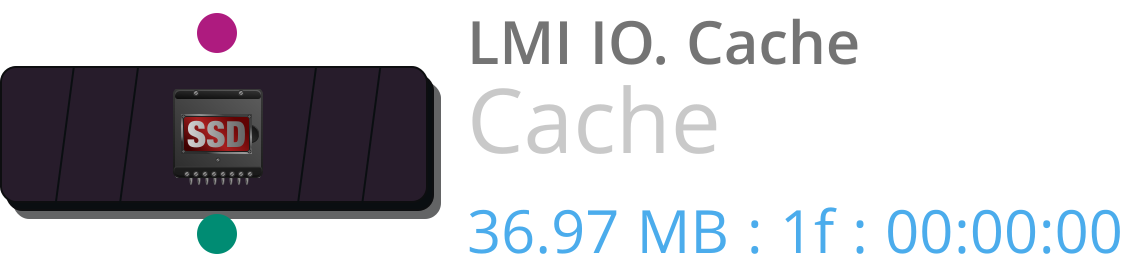
LMI Cache is our studio cache node built around one idea: you should never have to think about save paths again.
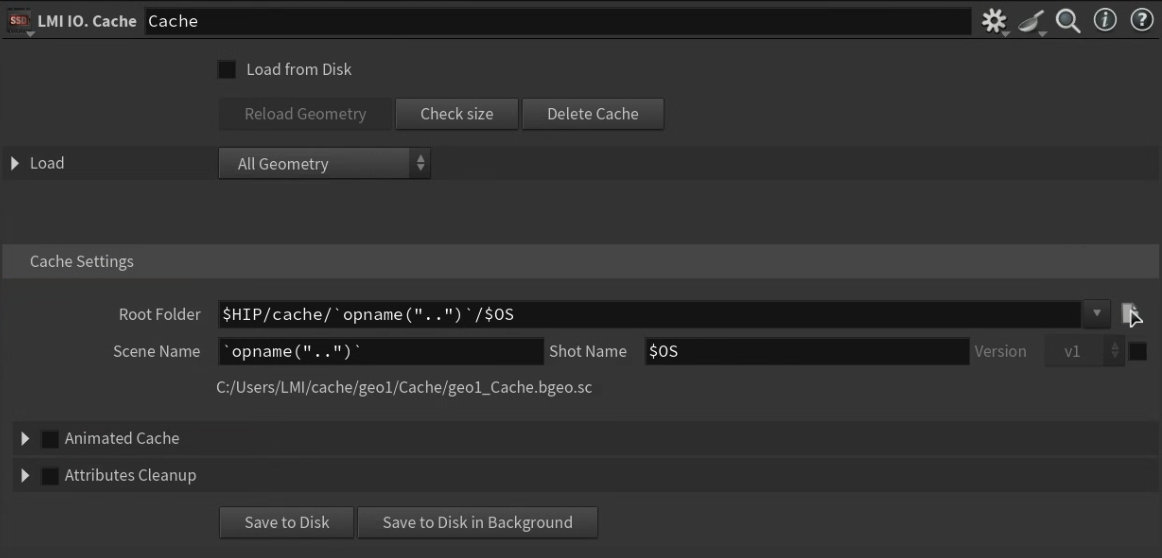
Instead of asking artists to invent folder structures per shot, LMI Cache writes outputs into a locked, predictable project hierarchy: /cache, /alembics, /cameras, /pointclouds, and so on, following studio standards by default.
That means you always know where things land, you can find them instantly, and your project stays clean no matter who touches it.
On top of path discipline, the node is designed for everyday production speed. It displays useful metadata right on the node: cache size on disk, frame range for animated exports, and revision info, so you can make decisions without opening folders or guessing what you wrote. Versioning is frictionless: switch revisions via a simple menu, compare sizes, and jump between iterations without breaking your flow.
LMI Cache turns caching into a one-click, predictable, traceable step and makes “where did this write?” a question you never ask again.
/cache. Always.

LMI Alembic Out
LMI Alembic is our production Alembic exporter designed for the realities of an Octane-centered assembly pipeline, where we can iterate geometry independently from master assembly and shading. In that pipeline exports have to be fast, consistent, and repeatable. Simplified versioning also helps iterration massively.
Functionally it carries forward the robust splitting logic from our legacy Octane Shot Manager, but applied to Alembic. It follows the same locked project hierarchy as the rest of our tools, writing into the studio-standard /alembics folder by default, no path decisions, no guessing where files went, no broken organization.
The standout feature is Splitting: it can write long animations out in clean frame chunks, enabling the Splitting Approach on Render Network, dividing massive scenes into seamless parts without changing the creative result. This makes heavy sequences practical to distribute, re-export, and iterate on without reprocessing everything.
The latest release also introduces simple wedging. If you need multiple variations (for example a huge nebula point cloud), you can wedge any attribute by typing something like @seed (or any attribute you want to vary) and export as many variants as you specify. It’s an extremely fast way to generate controlled variation at scale, without building separate networks or manual duplication.

/alembics. Always.

LMI Paths Manager
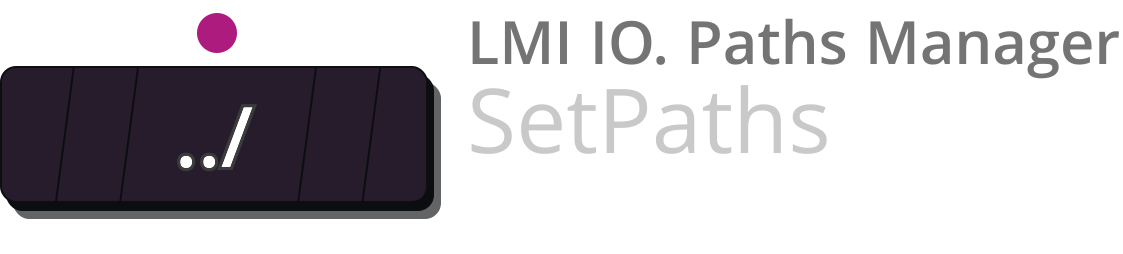
LMI Paths Manager is a small tool with a massive impact on organization, built for the reality of USD/Solaris pipelines where @path is everything. it works with any string attribute you specify, but initial use for it was paths organisation.
It was born while processing huge Speedtree datasets, where shading assignment and scene structuring in Solaris quickly turns into a mess if your paths aren’t clean and consistent. USD workflows live and die by hierarchy: collections, material bindings, visibility rules, variants - all of it becomes easier (or impossible) depending on how well your @path structure is managed.
Paths Manager reads the existing @path attributes coming in, presents them in a controllable way, and lets you rename, regroup, merge, and rebuild the hierarchy into something sane, then outputs a clean, updated path structure you can rely on downstream.
It’s an epic Solaris utility for turning chaotic imports into a predictable USD hierarchy, which makes shading, selection, and pipeline automation dramatically easier.
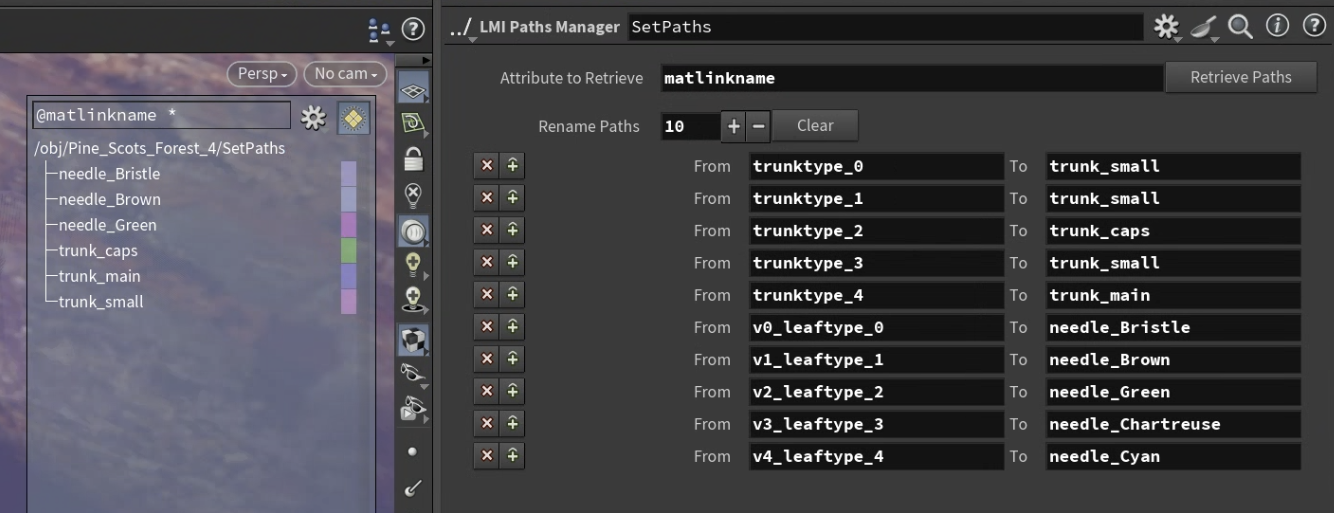
Stay organised.
Licensing
Tools are provided under a worldwide, non-exclusive license for use in any production context. You may install and use the toolset for any lawful purpose, including commercial work, client deliveries, internal studio pipelines, and distributed production environments.
All software is provided “as is”, without warranty of any kind, to the maximum extent permitted by applicable law.
Digital purchases are final and non-refundable, except where a refund is required by applicable consumer protection law.